Description
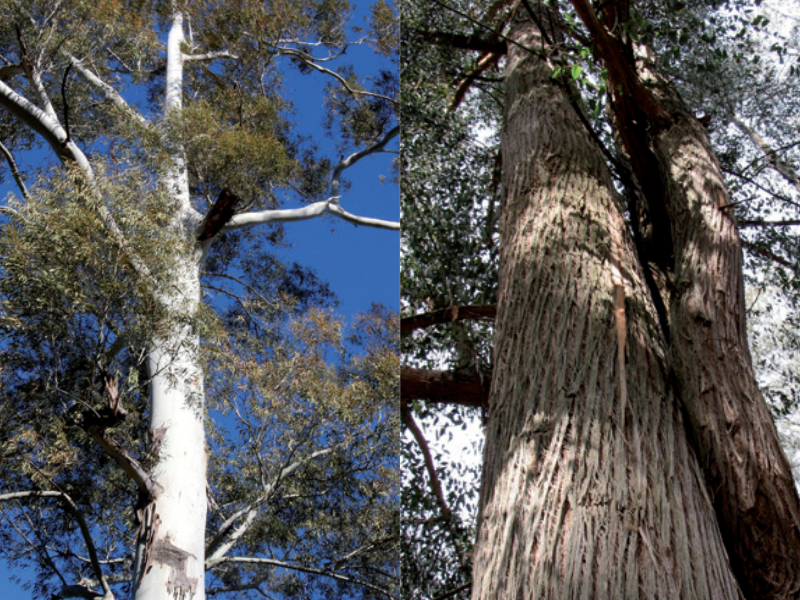
The hiking trail from the Vale de Canas National Forest to the river beach at Palheiros-Zorro is part of CIM-RC’s cross-cutting project “Rivers and Wetlands” project, in the Mondego Corridor, connecting the Vale de Canas National Forest (managed by the ICNF) to the Palheiros-Zorro River Beach. It is a nature-focused, linear trail, 3,200 m long, with the unique feature that it can be walked entirely downhill, if you choose the north-south direction, starting from the Vale de Canas Forest, and allowing you to discover, observe, and experience the grandeur of Europe’s tallest eucalyptus and Portugal’s largest araucaria. If you start the trail at the Vale de Canas National Forest, delight in the spectacular trees and native flora, such as the Alvarinho oak, the cork oak, the holm oak, the chestnut tree, the maritime pine, and the stone pine, without missing the cool shade of the plane tree-lined street or the aromatic herb garden, where you can discover a wide range of species. Before beginning the descent to the opposite end of the route—the Palheiros-Zorro river beach, an accessible beach with a Blue Flag—enjoy the panoramic view from the lookout point, from which you can see the vast expanse of the forest and, in the background, the Serra do Carvalho. Roughly halfway along the trail, there’s a must-see stop, not so much to rest from the long descent—which some might find somewhat challenging—but to admire the beauty and grandeur of two monumental trees that stand along the path, classified as trees of public interest by the ICNF: a eucalyptus tree, about 75 m tall, believed to be the tallest eucalyptus of this species in Europe, and a Queensland araucaria, the tallest in Portugal, standing 54 m tall. In the vicinity of these two species are many other notable eucalyptus trees, such as a 65-meter-tall specimen of E. viminalis, another of E. globulus, standing 63 m tall, among several specimens of E. obliqua and E. pulchella, which are smaller in size. In addition to these specimens, there are also sequoias, Bussaco cedars, plane trees, Atlas cedars, and American giant thuja. This natural setting would not be complete without the opportunity to enjoy the adjacent water source, where one can spot several amphibians such as the Lusitanian salamander or the yellow-spotted salamander. Following the trail, which descends steadily along paths through dense vegetation and family vegetable gardens (in its final stretch), you’ll reach the Mondego River and the Palheiros-Zorro River Beach, your final destination. It is worth noting that this trail connects to two others: the Vale de Canas National Forest Interpretive Trail, at its northern end; and the Riverside Trail, at its southern end, at the river beach.