Attention! This trail is marked as closed for maintenance!
Description
We could call it the Trail of Earth and
Heaven, such are the heights we climb and the depths to which
we descend. But it’s worth the effort. It is as refreshing as a spring of
cool water when the desert wears us down and thirst burns within us.
From the top of the Chapel of Santa Bárbara, the
gaze wanders toward the distant ridges, which fade into shades of
gray and blue, and returns distorted. With it comes the imagination and
the dream that fuel the fantasy of setting out on a journey of discovery. Vila Real
is seen in a sort of approaching bird’s-eye view.
The vineyards and olive groves trace the
furrows of hard work across the fertile, steep schist soil. The villages look like
flocks of houses grazing on the green landscape, lending it a pale,
cheerful radiance.
Descending the steep slopes, to which
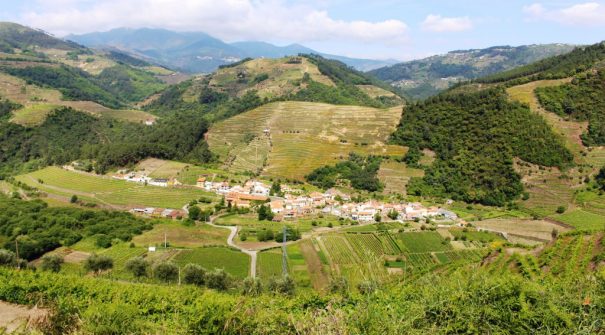
the vines cling in rows and lines, we come upon the village of
Veiga, a cluster of light-colored houses surrounded by greenery, with a
at the bottom of the valley, with friendly and outgoing people. It is a
fertile green landscape, festive in its abundance of vegetable gardens, flowers, vineyards, and
grape varieties for wine and for the table. From down below, at the bottom of the
valley and looking up at the slopes that seem to touch the clouds, the view is
enchanting and even impressive for the earthly and human scale it
reveals. From above, on the EN2, you can see the deep, flat valley adorned by
the patterns of farms and vegetation, by the Arcadela River with its clear waters, and
by the cheerful smile of the houses.
The vineyards that yield grapes for Port
wine perch on the terraces. The people possess a
spontaneous and communicative warmth that only a people who have grown accustomed to addressing
Mother Earth as “you” can possess. They love the place where they live and are
grateful to it for its fertility.
“There is no land like the Veiga in all of Penaguião:
Penaguião produces only wine, but Veiga produces both wine and bread.”
This verse, taught to us by one of its
residents, who recited it with a gleam of pride in his eyes, fully illustrates
what every visitor’s eyes can see. But the
Trail, capricious and proud of its beauty, leads us to other
places. Each one has something unique, whether in its landscape or in the
memories etched into the stones of the chapels and the oldest houses.
When we leave, after having walked every kilometer, we find ourselves wanting to return again and again.